Aircraft Parts Purchasing & Receiving course description
EASA Part-145 / Part-M / Part 21
Aircraft Parts Purchasing, Receiving and Acceptance Online Training
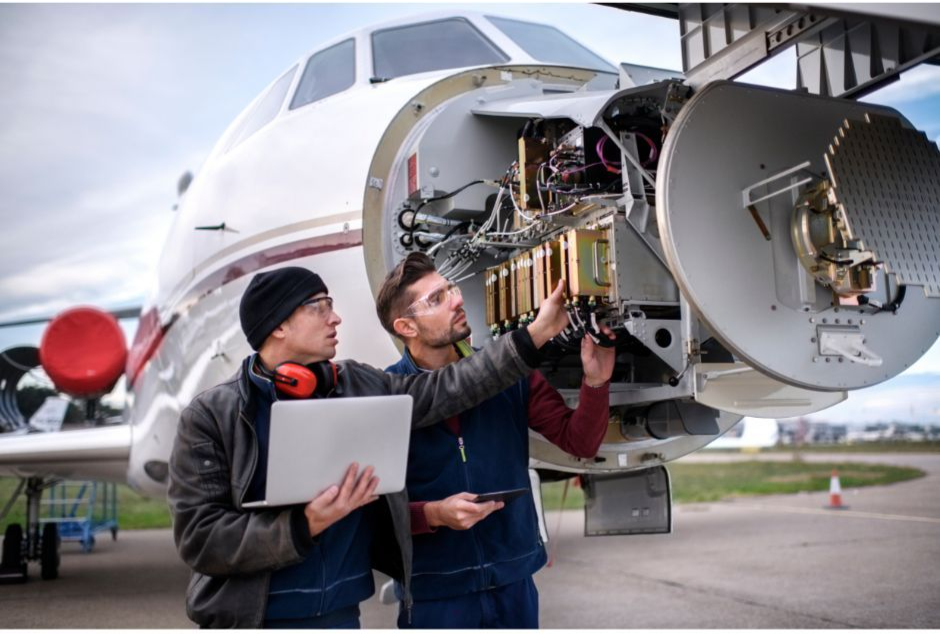
Buy, receive and accept compliant parts – Purchasing, stores, receiving inspection, quality and maintenance
Corporate & group rates
Online course
7 videos + 8 PDF sheets
Alain François
6 quizzes + final exam
About 2 hours
€80
Course objectives
Select, evaluate and monitor parts suppliers: POAs, Part-145 organisations, distributors.
Check an EASA Form 1 and an FAA 8130-3, for a new or a maintained part, including dual release.
Classify a part under 145.A.42 and M.A.501: serviceable, unserviceable, unsalvageable, standard part, material.
Carry out receiving inspection and manage quarantine and segregation in stores.
Recognise a suspected unapproved or counterfeit part and report it.
Ensure the traceability of life-limited parts, teardown parts and PMA parts.
Teaching method
Illustrated study sheets
Practice quizzes after each module
Target audience
Assessment
This course must be completed in full: the videos, the study sheets and the six modules.
Each module ends with a 5-question practice quiz.
A certificate is issued after a final exam (20 multiple-choice questions, 40 minutes, 2 attempts).
80% correct answers are required (16 out of 20).
Content
• Introduction – Course objectives
• Module 1 – Selecting and monitoring suppliers: POA, Part-145, distributors
• Module 2 – Release documents to check: EASA Form 1, FAA 8130-3, new and used parts
• Module 3 – Categories of parts: 145.A.42 / M.A.501, standard parts, raw materials, unsalvageable parts
• Module 4 – Receiving inspection, quarantine and segregation
• Module 5 – Suspected unapproved and counterfeit parts
• Module 6 – Traceability: life-limited parts, teardown parts, PMA
• Regulatory annexes
• Final exam: 20 multiple-choice questions
Benefits
Prerequisites
YOUR CERTIFICATE, SIGNED BY A QUALIFIED INSTRUCTOR
4,000+ professionals trained in France and internationally.
Frequently asked questions about the Aircraft Parts Purchasing, Receiving and Acceptance course
1. Why a course on purchasing and receiving parts?
An unapproved or poorly documented part can cause an accident. Purchasing and stores are the last barrier before the aircraft, and the authority checks this process at every audit. This course gives you a complete checking method.
2. Who is this course for?
Buyers, storekeepers and receiving inspectors, technicians and certifying staff of Part-145 organisations, and quality and airworthiness managers of CAMOs, operators and distributors.
3. How long does the course take?
About 2 hours. It includes 7 videos, 8 PDF sheets, 6 modules with practice quizzes and a 20-question final exam. You learn at your own pace, in one session or several.
4. What is the course based on?
Regulation (EU) No 1321/2014 (145.A.42, M.A.501, 145.A.50, 145.A.55, 145.A.60) and its AMC and GM, Part 21 (21.A.307, Subpart Q), Regulation (EU) No 376/2014, and the EU – US agreement (TIP revision 7 and MAG).
5. What score do I need to get the certificate?
You need at least 80% correct answers in the 20-question final exam (16 correct answers). You have two attempts.
6. How much does the course cost?
The course costs €80 (VAT included). The price includes access to the videos, PDF sheets, quizzes, final exam and digital certificate. To train a team, ask us for a group quote.
7. Is an FAA 8130-3 accepted in Europe?
Yes for a new part manufactured under an FAA production approval. For a part maintained in the United States, a dual release by a repair station also holding EASA approval is required. Module 2 explains how to check it, and our Dual Release Mastery course goes further.
8. Are PMA parts accepted?
Yes, under conditions: under the technical implementation procedures of the EU – US agreement, a non-critical PMA part is accepted; a critical part only if it is made under licence from the type certificate holder or approved through an FAA STC validated by EASA.
9. Can I take the course on a mobile or tablet?
Yes, the course works on computers, tablets and smartphones. You pick up where you left off.
10. How long is the certificate valid?
The certificate has no expiry date. We recommend refresher training whenever the regulation or your procurement procedures change significantly.
RECOMMENDED COMPLEMENTARY COURSES
Course content
Alain François