Fuel Tank Safety (FTS) training – course description
Fuel Tank Safety (FTS) – Phases 1 and 2
Fuel Tank Safety (FTS) Online Training – Phases 1 and 2
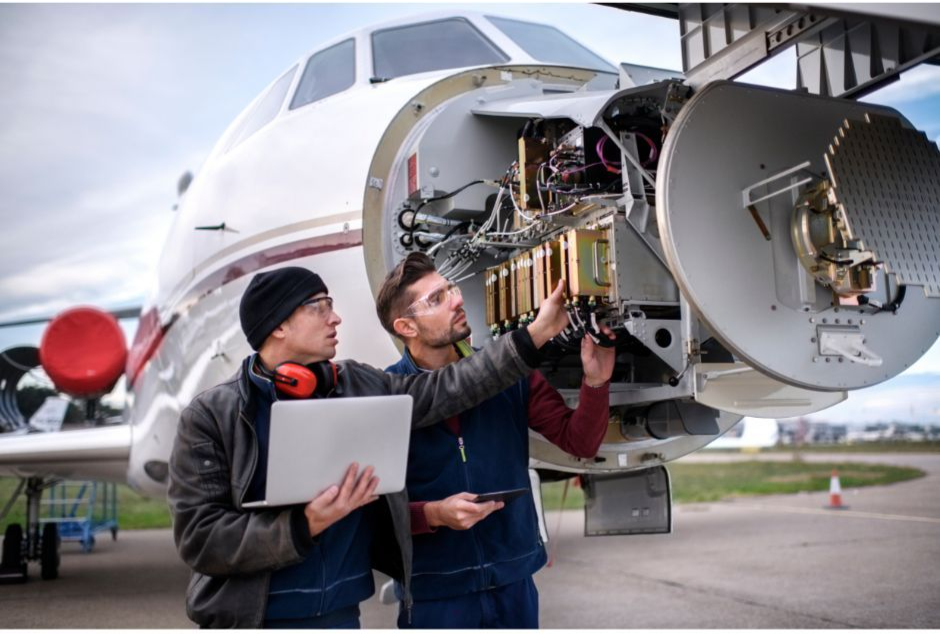
FTS training in line with EASA Decisions 2009/006, 007 and 008 – Part-CAMO, Part-145 and Part-66
Corporate & Group Pricing
Online course
6 narrated, subtitled videos + 19 PDF sheets and interactive exercises
Alain François
6 quizzes + final exam
About 8 hours
70 € excl. VAT
Course objectives
Explain why a fuel tank can explode: fire triangle, vapours, flash point, ignition energy.
Know the accidents behind the regulations: TWA 800, Manila, Bangkok, Bangalore.
Place SFAR 88, INT/POL 25/12, TGL 47, CS 25.981 and the 2009 EASA decisions in context.
Tell an ALI from a CDCCL and find them in the AMM, ALS, MPD and CMMs.
Manage CDCCLs in the organisation: work cards, MOE, ADs and SBs, parts and Form 1, certification.
Work safely in a fuel tank and near an inerting system.
Teaching method
Regulatory sheets and example sheets in PDF
Interactive exercises and a practice quiz after each module
Access to an instructor throughout the course
Who should attend
Assessment
This course must be completed in full: the videos, the sheets and the six modules.
Each module ends with an ungraded 5-question practice quiz, with the correct answer and an explanation after each answer.
A certificate is issued after a final exam (20 multiple-choice questions, 40 minutes).
80% correct answers are required (16 out of 20); the 75% pass mark set by EASA for phase 2 is a minimum. Two attempts are allowed.
Content
• Module 1 – Understanding the explosion risk
• Module 2 – Accidents and investigations
• Module 3 – The regulations
• Module 4 – ALI and CDCCL
• Module 5 – Managing CDCCL in your organisation
• Module 6 – Working safely
• Final exam, satisfaction survey and certificate
Benefits
Prerequisites
Read and understand English. Experience in maintenance or airworthiness management is useful, but no prerequisite is required.
YOUR CERTIFICATE, SIGNED BY A QUALIFIED INSTRUCTOR
Frequently asked questions about Fuel Tank Safety (FTS) training
1. Why Fuel Tank Safety training?
Since 1959, 17 fuel tank explosions have caused 542 fatalities. The investigations, including TWA 800, showed that a maintenance error can create an ignition source. EASA therefore requires FTS training for the staff concerned.
2. Who is this course for?
CAMO and Part-145 staff who manage, plan, perform, supervise, inspect or certify maintenance of the aircraft and fuel components concerned. Phase 1 alone is enough for management, quality staff and authority inspectors.
3. Does it cover phase 1 and phase 2?
Yes. It covers awareness (phase 1) and detailed training (phase 2), with the content required by paragraph E of the EASA guidelines.
4. How long does the course take?
About 8 hours, the duration recognised as an acceptable means of compliance for phase 2. You progress at your own pace and can pause at any time.
5. What pass mark is required?
You need at least 80% correct answers in the 20-question final exam (16 correct answers). You have two attempts.
6. How much does the course cost?
The course costs €70 excl. VAT. The price includes the videos, PDF sheets, exercises, quizzes, final exam and certificate. To train several people, request a corporate quote.
7. Is e-learning accepted by EASA?
Yes, distance learning is accepted for phase 2 when it includes intermediate questions, recorded results and access to an instructor. This course meets all three conditions.
8. Which aircraft are concerned?
Large CS-25 aeroplanes certified after 1 January 1958 with 30 passengers or more or a payload of at least 3,402 kg, and aeroplanes whose certification basis includes CS-25 amendment 1 or later.
9. Can I take the course on a mobile or tablet?
Yes, the course works on computers, tablets and smartphones. You pick up where you left off.
10. Is continuation training needed?
Yes, continuation training is required every two-year period. Our "Fuel Tank Safety (FTS) – Refresher" course covers it in six short modules.
RECOMMENDED COMPLEMENTARY COURSES
Course content
Alain François